

Trauma Therapy in Tampa, FL
You've been carrying this long enough. EMDR therapy offers a proven path to healing trauma, PTSD, complex PTSD (C-PTSD), and the wounds that talk therapy hasn't been able to reach.
Something happened and a part of you hasn't been the same since.
Maybe it was one event — an accident, an assault, a loss that broke something open. Or maybe it's been a lifetime of smaller things that stacked up until the weight became unbearable. Years of walking on eggshells. A childhood that didn't feel safe. A family that didn't have the tools to give you what you needed - that's complex PTSD, often called C-PTSD, and it's just as real as any single traumatic event.
Either way, you've probably tried to move forward. You've talked about it. You've understood it. You've done the work. And yet something still gets triggered. Something still keeps you up at night. Something still makes you feel like you're right back there, even when you're safe.
That's not weakness. That's trauma, and it lives in the body, not just the mind.
Trauma therapy in Tampa at Tampa EMDR is designed specifically for people who are done just talking about it. Using EMDR (Eye Movement Desensitization and Reprocessing) and other body-based approaches, we go to where the trauma actually lives and help your nervous system finally let it go.
You have experienced a traumatic event and have not been able to fully recover
You have PTSD or suspect you might, even if it did not feel "bad enough" to count
You are living with Complex PTSD (C-PTSD): repeated or prolonged trauma, childhood wounds, or family-of-origin pain that has shaped who you are
You struggle with anxiety, panic attacks, or hypervigilance that seems to come out of nowhere
You have been in talk therapy but feel like you keep going in circles
You carry childhood trauma, grief, or attachment wounds that have never fully healed
You have experienced sexual assault, domestic violence, a car accident, or a medical trauma
You are a first responder, nurse, veteran, or caregiver dealing with secondary trauma or burnout
You feel disconnected from yourself, numb, or stuck, and you are ready to actually feel better
Trauma therapy may be right for you if…
If you're not sure whether what you experienced "qualifies" as trauma — it does. If it changed you, it matters.

EMDR for Complex PTSD (C-PTSD)
Complex PTSD, often shortened to C-PTSD, is what happens when trauma isn't a single event but a pattern. It develops from repeated or prolonged exposure to harm or distress — chronic childhood neglect, domestic abuse, ongoing emotional invalidation, or growing up in a home where you never felt safe enough to fully relax.
Where PTSD typically centers around a discrete event (a car accident, an assault, combat), C-PTSD reshapes how a person sees themselves and the world. People living with C-PTSD often describe:
A persistent sense of shame, defectiveness, or being "different" from other people
Difficulty trusting others or feeling close even in safe relationships
Emotional flooding or numbness that comes on without warning
A harsh inner critic that never seems to quiet down
Feeling stuck in patterns you understand but can't seem to change
Chronic anxiety, hypervigilance, or a body that never fully rests
Standard talk therapy can help with insight, but for C-PTSD it often doesn't reach the layers where the wounds actually live. EMDR is one of the few therapies specifically adapted for complex trauma. The work goes slower and the resourcing phase matters more — but the depth of healing possible is significant.
If you have been told before that your case is "too complex" for therapy to help, or you have done years of talk therapy and still feel stuck, EMDR for C-PTSD may be what you have been missing.
What is trauma therapy and how is it different from regular therapy?
Traditional talk therapy helps you understand your experiences. You explore the past, identify patterns, and build insight. For many people, that's valuable. But for trauma, understanding isn't always enough.
Trauma gets stored differently in the brain. It can bypass the thinking mind entirely and live in your nervous system — showing up as physical reactions, emotional flooding, or a constant low-level state of alert. You can know, intellectually, that you're safe. And still not feel it.
Trauma therapy at Tampa EMDR uses approaches designed to work at that deeper level:
EMDR (Eye Movement Desensitization and Reprocessing) is one of the most extensively researched trauma treatments available today. It's recommended by the World Health Organization, the American Psychological Association, and the Department of Veterans Affairs for the treatment of PTSD and trauma.
EMDR works by helping your brain reprocess traumatic memories so they no longer feel like they're happening right now. Using bilateral stimulation — typically side-to-side eye movements or tapping. EMDR activates both sides of the brain while you briefly recall a distressing memory. This allows the memory to be "filed" properly, losing its emotional charge without requiring you to talk through every detail.
Most clients describe EMDR as surprisingly gentle. The memory doesn't disappear, but it stops having power over you.
EMDR Therapy for Trauma
EMDR Intensives and Retreats
For those who want deeper, faster results, Tampa EMDR also offers EMDR Intensives, which are extended therapy sessions of 3 to 6 hours that allow you to do in one or two days what might otherwise take months of weekly therapy.
EMDR Intensives are ideal for people with busy schedules, those who travel, or anyone who has felt stuck in weekly therapy and wants to break through more quickly.
The Safe and Sound Protocol is a 5-hour auditory intervention designed to calm the nervous system and prepare it for deeper trauma processing. It uses specially filtered music to retrain the nervous system's response to safety cues, making it an excellent complement to EMDR therapy.
Safe and Sound Protocol (SSP)
Hypnotherapy can be used alongside EMDR to access and reprocess traumatic material at a deeper level of consciousness, reduce hyperarousal, and reinforce the positive beliefs developed through EMDR work.
Hypnotherapy
What to expect from trauma therapy at Tampa EMDR
Starting therapy — especially trauma therapy — can feel daunting.
Here's what the process typically looks like so you know exactly what you're stepping into.
1. Free Consultation We start with a complimentary 15-minute phone or video call. This is a chance for you to ask questions, share what you're dealing with, and see if working together feels like a good fit. There's no pressure and no commitment.
2. Assessment & History Your first few sessions focus on understanding your history, your goals, and what's been getting in the way. We take this part slowly — good trauma therapy never rushes you into processing before you're ready.
3. Resourcing & Stabilization Before any trauma processing begins, you'll learn tools and techniques to help you stay grounded and regulated. This phase builds a felt sense of safety — in your body and in the therapy relationship.
4. EMDR Processing This is where the deeper work happens. Using bilateral stimulation, we work through traumatic memories and experiences in a structured, contained way. Most people are surprised by how manageable this process feels.
5. Integration As memories lose their charge, we work to install new, positive beliefs and help you build the life you want — not just the absence of symptoms.
[Things to Keep in Mind]
Every person heals at their own pace. Some clients experience significant shifts in just a few sessions. Others need more time, especially with complex or childhood trauma. We'll talk honestly about what to expect for your specific situation.

Hi, I'm Leslie de Graaf, a Licensed Mental Health Counselor (LMHC) and EMDR therapist based in Tampa, Florida.
I specialize in trauma, PTSD, grief, complex PTSD (C-PTSD), and anxiety, particularly with adults who have already tried therapy and felt like they weren't getting anywhere. I know how discouraging that feels. And I know that the right approach, delivered at the right depth, can change everything.
I'm trained in EMDR therapy, hypnotherapy, IFS-informed parts work, and the Safe and Sound Protocol. I also offer EMDR Intensives for clients who want faster, more immersive healing, whether they're local to Tampa, Florida-based, or traveling from anywhere to Florida from out of state.
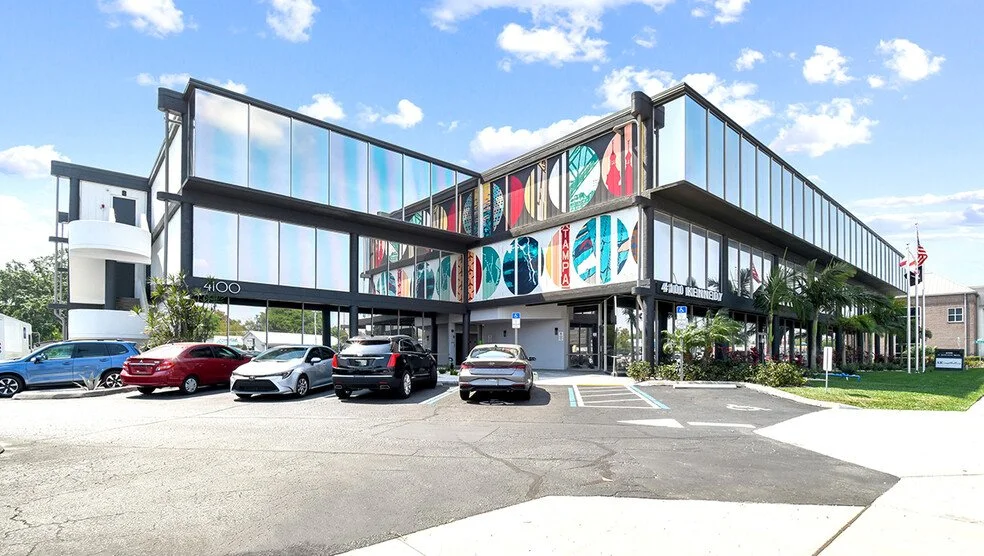
My offices are located in South Tampa (4100 W Kennedy Blvd) and New Port Richey (6014 US Highway 19). I also offer telehealth sessions throughout Florida.
Meet your trauma therapist in Tampa
Trauma therapy available in Tampa and beyond
South Tampa
New Port Richey
Telehealth - All of Florida

Frequently asked questions about trauma therapy in Tampa
-
EMDR stands for Eye Movement Desensitization and Reprocessing. It's a structured therapy that helps the brain reprocess traumatic memories so they no longer feel overwhelming or present-tense. During EMDR, you briefly focus on a traumatic memory while engaging in bilateral stimulation, usually guided eye movements, tapping, or auditory tones that alternate from side to side.
This bilateral stimulation appears to activate the brain's natural information processing system, similar to what happens during REM sleep. The traumatic memory gradually loses its emotional intensity and gets "filed" as something that happened in the past, rather than something still happening now. Most clients find the process more manageable than they expected. text goes here
-
Talk therapy helps you understand your experiences through conversation, reflection, and insight. That's genuinely valuable — but for trauma, understanding often isn't enough. Trauma gets stored in the body and the nervous system, not just in conscious memory. You can know intellectually that you're safe and still feel a racing heart, a tight chest, or an urge to flee.
Trauma therapy, particularly EMDR, works at a neurological level targeting where the trauma is actually stored. Rather than talking around the experience, EMDR helps the brain reprocess it directly. Many clients who felt stuck in years of talk therapy find significant relief after just a handful of EMDR sessions.
-
It depends on your history, the nature of the trauma, and how your nervous system responds to treatment. Single-incident trauma (a car accident, one assault) often resolves in fewer sessions — sometimes as few as 6 to 12. Complex or childhood trauma, or C-PTSD, typically requires more time.
EMDR Intensives can compress months of progress into a few extended sessions, which is why many clients choose that format.
During our initial sessions, I'll give you a more honest, individualized estimate based on what you share with me.
-
EMDR is generally well-tolerated, but it's worth knowing what to expect. After processing sessions, some clients feel emotionally tired, more sensitive than usual, or notice that old memories or feelings surface between sessions. This is a normal part of the healing process. The brain continues to work after sessions end.
Most clients find these effects manageable, especially when they have good coping tools in place (which we build before any processing begins). If you have concerns, we'll talk through them openly before starting.
-
Yes. While EMDR was originally developed for PTSD, research now supports its use for generalized anxiety disorder, panic attacks, phobias, grief, depression, and more. Many anxiety disorders have a traumatic root - a past experience that trained the nervous system to stay on high alert. EMDR can address that root cause rather than just managing symptoms.
-
I am currently not in-network with insurance panels. Sessions are private pay.
Standard sessions are $200 per hour. EMDR Intensives are $300 per hour. Many clients find the faster results of EMDR, especially Intensives, make it more cost-effective than months of ongoing weekly therapy.
-
Weekly EMDR sessions are 50–60 minutes once a week. They're effective, but there's naturally a warm-up and wind-down period in each session, which limits how deep you can go each time.
An EMDR Intensive is an extended session of 3 to 6 hours — sometimes spread across consecutive days. Without the weekly start-stop, you can go deeper, process more, and achieve results that might otherwise take months. Intensives work particularly well for people with busy schedules, those who've been stuck in standard therapy, or anyone who wants to address their trauma in a more focused, contained way.
-
No, and this surprises many people. EMDR does not require you to narrate your trauma in detail or re-live it fully. You'll identify the memory we're working on and notice what comes up, but the bilateral stimulation does much of the work. Many clients find this one of the most relieving aspects of EMDR.…you don't have to put everything into words.
-
Yes. I offer EMDR therapy via secure telehealth for clients anywhere in Florida. Research supports the effectiveness of online EMDR and the bilateral stimulation can be delivered effectively through a screen using visual or audio cues, or a handheld tapping device. Telehealth sessions are a great option if you're outside Tampa or prefer the convenience of sessions from home.
-
My schedule does get full, but, yes. I am currently accepting new clients. The best first step is to book a free 15-minute consultation so we can talk about what you're dealing with and whether working together is a good fit. You can also call the office at 813-444-3106 and speak to Robyn, my amazing Admin Assistant, who can tell you more about my openings.
-
Complex PTSD describes trauma that comes from prolonged or repeated experiences, most often childhood neglect, abuse, or an unsafe family environment, rather than a single event. EMDR is one of the most effective therapies for C-PTSD because it works directly with the nervous system rather than relying only on talk. Treatment typically goes at a slower pace than EMDR for single-event PTSD, with more time spent building stabilization and inner safety before processing begins. Many people who felt stuck in talk therapy find that EMDR finally reaches the layers their previous therapy couldn't.

You don't have to keep living around your trauma.
Healing is possible, even if you've tried before and it didn't work. EMDR is different. The process is different. And you deserve support that actually reaches what's underneath. If you're ready to take the next step, I'd love to hear from you.
Located in South Tampa and New Port Richey. Telehealth available throughout Florida. Call or text: (813) 444-3106